Who owns the carbon in a forest, mangrove, or restored land?
That is difficult to answer in the Global South. Another nuance to this, within Article 6 of the Paris Agreement, is what happens to that carbon if/when it crosses a border. The underlying challenge is land: land carries decades of overlapping claims between state forest departments, community institutions, and private landholders. The opportunity of carbon finance forces a reckoning with these claims.
Four countries in South and Southeast Asia – Vietnam, Indonesia, Philippines, and India – have tried different approaches in 2026. None of them solve the question outright, but the progress on answers matter to NbS project developers, investors and financiers.
Vietnam’s legislated decrees
Vietnam’s legislative moves now give nature-carbon a regulatory identity. Four of them stand out, described below:
| Decree | Effective | What it does |
| Decree 180 | Mid-July 2026 | First legal recognition of forest carbon; assigns ownership by tenure, defines payment channels, sets a floor price on first-transfer transactions. |
| Decree 112 | May 2026 | Caps Corresponding Adjustment transfers at 50% for forestry/REDD+/mangrove/agroforestry categories, versus 90% for novel mitigation like geothermal and offshore wind. |
| Decree 119 | Pilot ETS launched August 2025 | Lets regulated entities meet up to 30% of compliance quota through offsets, including nature-based credits. |
| Decree 29 | January 2026 | Establishes the operational framework for the domestic carbon exchange, now live on the Hanoi Stock Exchange. |
The design demonstrates a delicate balancing act between facilitating market interest in carbon finance and meeting the country’s NDCs. Its early days; no forest-credit transaction had been disclosed under Decree 180 as this piece was written, and Vietnam’s long-standing LEAF/Emergent letter of intent for 5.15 million tonnes of forest credits was still at the negotiation stage, not signed, well over a year after it was first reported.
Indonesia solved land access, but not the underlying claim
Indonesia lifted a moratorium on forestry carbon exports this year under Ministry of Forestry Regulation 6/2026. Three Verra-registered projects received approval to issue credits, and Verra is now linking its registry to Indonesia’s domestic system through an API connection. The mechanism running underneath this is the Forest Utilization Business License, or PBPH, a permit system that grants land access for a range of forest-based activities, carbon project development increasingly among them.
While PBPH grants operational access to land through an application process (which is now closed from public scrutiny), it does not resolve who holds claims to that land, and therefore the carbon rights. In November 2025, the Long Isun community in East Kalimantan filed a formal grievance against a World Bank-backed emissions reduction program, alleging the project proceeded without resolving territorial conflict or securing free, prior and informed consent (FPIC).
The Indonesian government wants to leverage its vast forest resources in this emerging asset class, and plans to create a $65B green fund from proceeds. Indonesia has made administrative progress, through measures like joint governance agreements between communities and PBPH holders. But public commentary, like by East Asia Forum, has flagged that carbon credits must not come at the cost of customary forest rights, highlighting importance of legislative clarity through instruments like the Indigenous Peoples Bill and reconciling 2012’s Constitutional Court ruling on indigenous forest status vis. a vis. social forestry programs.
The Philippines’ legislative attempt and the executive backstop
The Philippines has attempted a legislative fix for carbon rights across successive Congresses. A Carbon Rights framework first appeared as part of the broader Low Carbon Economy Act discussions, then was filed standalone as House Bill 10635 in the 19th Congress, where it did not advance to passage. It was refiled as HB 1817, the “Carbon Rights Act of 2025,” in the 20th Congress on July 14, 2025. The bill has sat with the House Committee on Climate Change since July 30, 2025, with no recorded further action.
The Philippine Department of Environment and Natural Resources (DENR) has attempted executive measures to not let legislative processes be a bottleneck. In February, it adopted a Roadmap to Readiness in the Voluntary Forest Carbon Market spanning 2026 to 2030, built around four priority areas: a policy framework that harmonizes forest-asset rules and mandates clear carbon rights guidance, a National Forest Monitoring System and Forest Carbon Credit Database to guard against double counting, an institutional split between the Forest Management Bureau for terrestrial forests and the Biodiversity Management Bureau for blue carbon, and a financing track that includes a proposed trust fund for reinvesting carbon revenue into forest protection.
A companion order, Administrative Order 2026-05, effective in March, governs carbon credit projects across forest lands, protected areas, and ancestral lands and domains within a single instrument. That is a direct attempt to reconcile carbon rights with indigenous land rights in one framework, rather than leaving the two to collide later, and commentary on the rollout has already flagged a next step: the National Commission on Indigenous Peoples will need standardized, expedited FPIC templates specifically for carbon rights agreements.
India has state-level answers
At the national-level, India’s Carbon Credit Trading Scheme (CCTS), includes NbS within the Offset Mechanism but does not demonstrate if/when the two can interact (the way Vietnam’s Decree 119 permits). The Green Credit Programme’s scope was expanded in August 2025 to count toward compensatory afforestation obligations, giving it a compliance-linked demand channel. that CCTS forestry offsets still don’t have. A similar channel for CCTS-Offset Mechanism’s NbS activities can give the sector a domestic fillip.
The interactions between NbS carbon projects with national forest legislation and local governance legislation has limited study, if at all. Forestry also does not appear on the Ministry of Environment, Forest and Climate Change’s finalized list of activities eligible for Article 6.2 transfer. In the absence of a stated national position, individual states have attempted their own answers, given that forest is a Concurrent Subject governed by both the Centre and the State.
Kerala’s is procurement-led. In July 2025, the state’s Energy Management Centre issued a tender on behalf of the Kerala Forest Department for a carbon project developer to work across mangrove restoration, agroforestry, wetland conservation, and invasive species removal. It was structured as a revenue-share engagement with no upfront payment to the state. The winning consultant is to be made responsible for documenting land rights and tenure, and for conducting FPIC, as part of the deliverable.
Tamil Nadu has adopted several channels. They also began with a procurement channel like Kerala. Muthupet’s mangroves, in Thiruvarur district, were designated the state’s first carbon credit pilot site in mid-2025, run through the Tamil Nadu Green Climate Company. A project developer was to be contracted via tendering. Simultaneously, the state has World Bank-funded coastal resilience project that now channels restoration funding directly to Village Mangrove Councils, registered societies with joint bank accounts held by the council president and the local forest range officer. Whether this will/can include a component of carbon revenues is unknown. Tamil Nadu’s most concrete recent carbon-market action is where land and carbon rights were never contested: the State’s budget announcement in August 2026 launched a carbon scheme for farmers (soil carbon, DSR/AWD practices) with a modest ₹60 lakh demonstration allocation.
Meghalaya has been a long-standing example of community-led carbon projects; the Khasi Hills Community REDD+ project is a program that every novice in the carbon space in India first learns about. A decade of operating history, and of visible community-level revenue distribution, gives later entrants a precedent. The state has also structured an institution – The Meghalaya Basin Development Authority (MBDA) – to act as program partner and co-proponent, convene the district councils, and give external capital a single state-backed entity to contract with. EarthTree run Regeneration Meghalaya, a 30-year, $71 million agroforestry and restoration programme across 22,670 hectares financed through AstraZeneca’s AZ Forest, on that basis. IORA Ecological Solutions runs MegCare with MBDA, Rabobank’s ACORN platform and all three district councils, and raised ₹8.5 crore in debt from Caspian Impact Investments in July 2025, underwritten against future credits. Most recently, the state began ground rollout of a Verra-ARR bamboo afforestation project with Compliance Kart and the MBDA in August 2026.
Meanwhile, carbon project developers in other states are developing projects by negotiating with counterparties where land is not disputed, i.e. farmers, leading to several agriculture and agroforestry projects. The Panna Afforestation Project in Madhya Pradesh, led by Climate Impact Partners, was the first VM0047 project in India and Microsoft signed an offtake from this project 1.5M tCO₂e over 30 years.
To each their own…
Each country is building an answer within the context of its cultural history, governance mechanism, and political priorities. The question of nature-carbon rights is also intricately linked with land tenure, which cannot be solved within a few months/years to facilitate a growing carbon market. Therefore, there is not one right answer. What they all perhaps agree on is that there is value to the carbon stored in their natural systems, and each wants to capitalize on that in the ways that suit them best. These rules will continue to evolve and the carbon market will be watching.
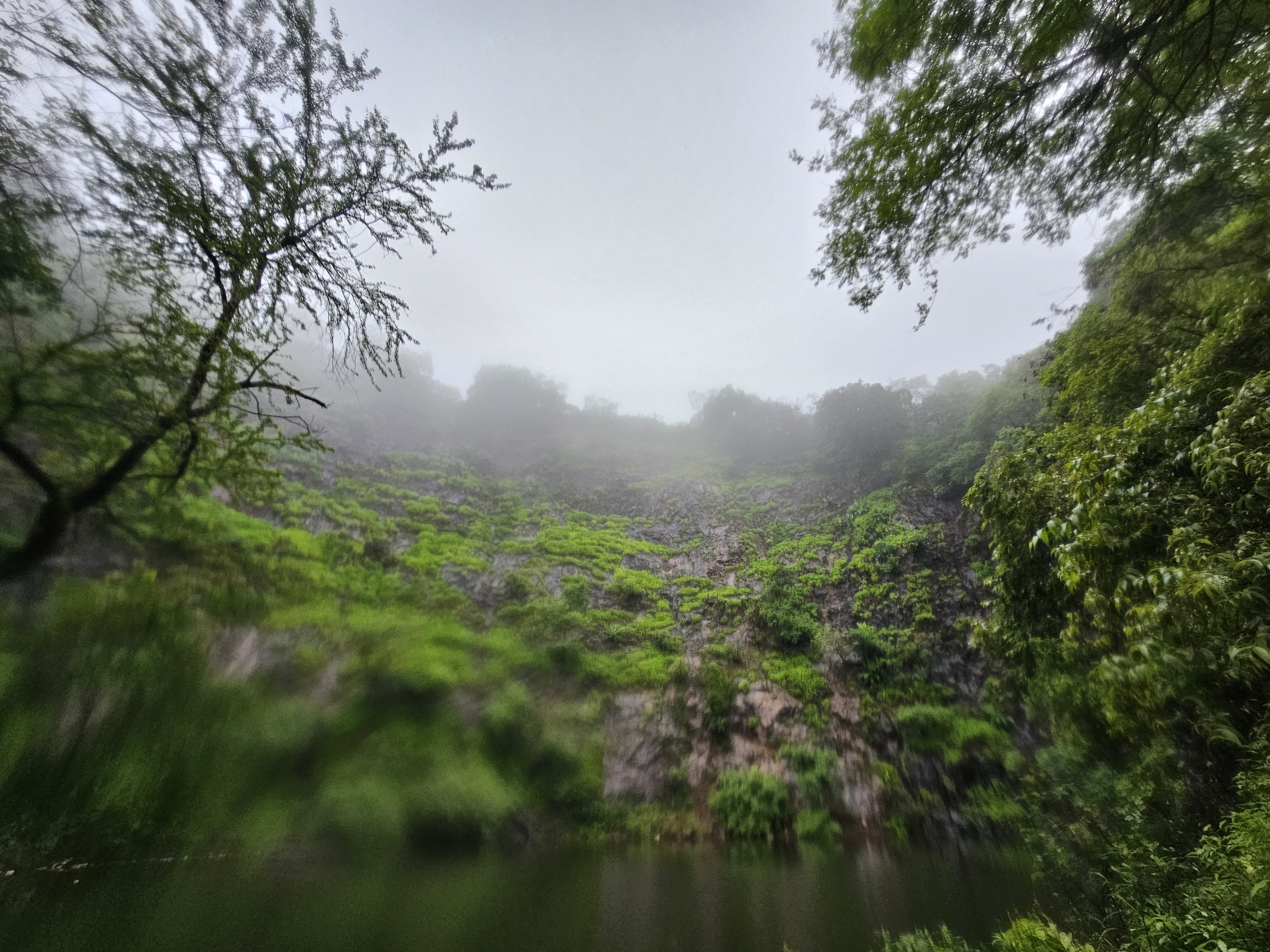
Featured image credits: Megha Paul.
Leave a Reply